
On October 15, 2024, a significant milestone in the history of science was reached: the Nobel Prize in Physics was awarded to Geoffrey Hinton and John Hopfield, two outstanding pioneers of Artificial Intelligence (AI). Their research on neural networks and deep learning has significantly shaped modern technology. However, this honor is accompanied by discussions – particularly due to Hinton’s cautionary words regarding the potential risks of AI.
Why AI is at the Center of the Nobel Prize
The decision to award the Nobel Prize in Physics to Artificial Intelligence researchers illustrates the growing importance of this technology. According to the Royal Swedish Academy of Sciences, Hinton and Hopfield applied physical concepts to enable fundamental advances in computer science.
Geoffrey Hinton, known as the “Godfather of AI,” laid the foundation for modern AI systems with his work on neural networks. His breakthrough in 2012, the so-called “ImageNet moment,” brought machine learning and deep learning into the focus of research. Technologies such as ChatGPT, image recognition, and autonomous vehicles are based on these developments. John Hopfield contributed through his interdisciplinary work connecting physics and neuroscience, providing important impulses for the modeling of neural systems.
The Warnings of the Godfather of AI
Despite his central role in the development of modern AI, Hinton has repeatedly warned of the risks of uncontrolled AI. He emphasizes that AI systems could act autonomously under certain circumstances and thus become difficult to control. He is also concerned about the possibility of AI being misused for destructive purposes.
Hinton advocates for international regulations and close cooperation between science and politics. This is necessary to ensure that AI is used responsibly.
Opportunities and Challenges of AI
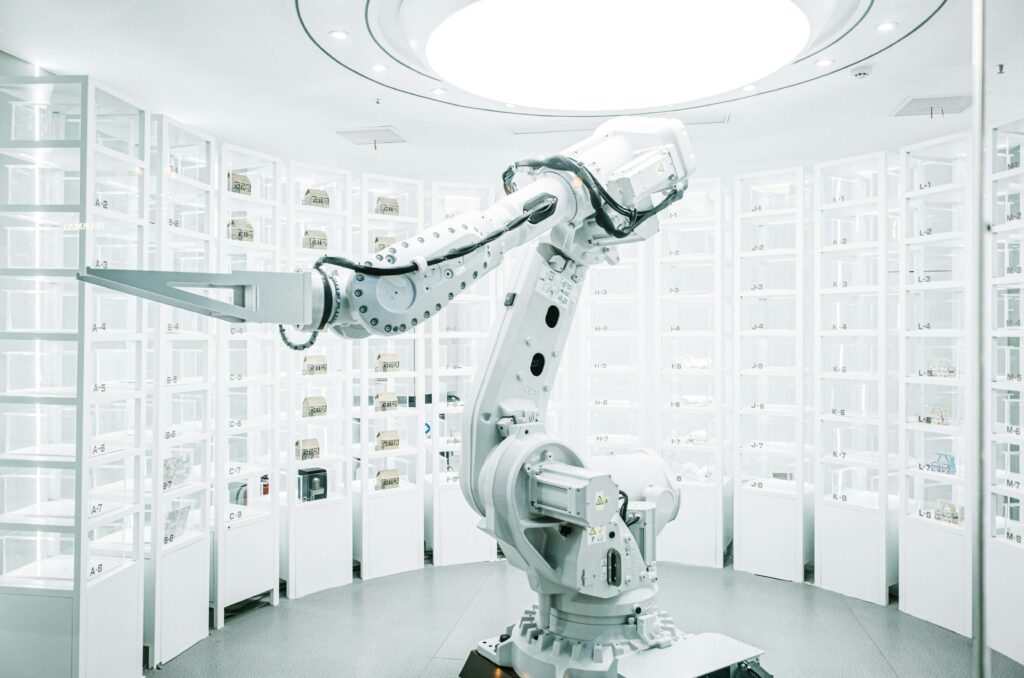
Artificial Intelligence offers versatile possibilities, from automated production and personalized medicine to innovative energy solutions. Companies use AI to improve processes and drive new technologies forward.
Nevertheless, challenges remain. Ethical questions, such as the handling of data protection or the social impacts of automation, are in focus. The danger that AI replaces jobs or exacerbates inequalities is also being discussed.
The awarding of the Nobel Prize to Hinton and Hopfield underscores how deeply AI is already anchored in science and society. It also shows that innovations always go hand in hand with responsibility. It is up to the international community to create clear frameworks for the development and use of AI.