
Data protection is everywhere today. But what was it actually like in the past? What began as a safeguard against theft has evolved over the decades into a comprehensive fundamental right. In 1970, Hesse laid the groundwork with the world’s first data protection law. This “Made in Germany” milestone had a decisive impact on the global history of data protection. Join us on a journey into the past and discover why data protection is more important today than ever before.
The Importance of Data Protection
Even today, data protection is much more than just a bureaucratic matter. It is a fundamental right. Over the years, Germany has developed strict data protection laws to safeguard its citizens’ personal information. The Federal Data Protection Act (BDSG), the General Data Protection Regulation (GDPR), and the European Union’s Cyber Resilience Act (CRA) are important legal frameworks designed to ensure that personal data is adequately protected.
After all, our personal data is valuable. It can be used to uniquely identify us, analyze our habits, and even influence our behavior. That is why it is crucial to ensure that our data remains protected.
Let’s take a trip back in time
Data protection, as we know and practice it today, is a relatively recent concept. Its origins date back to antiquity—in the so-called Hippocratic Oath, around 400 B.C., doctors pledged to keep their patients’ most intimate secrets. This gave rise to medical confidentiality, a principle that remains in effect to this day.
American jurists Louis D. Brandeis and Samuel D. Warren set another milestone in the history of data protection in 1890 with their groundbreaking article “The Right to Privacy.” In this article, they described privacy as a natural human right—the “right to be left alone.”
Germany, too, made history in this area: On October 13, 1970, the state of Hesse passed the world’s first data protection law. In response to the increasing use of automated data processing in public institutions—such as hospitals and schools—it was recognized that the protection of personal data had to be a priority in order to maintain citizens’ trust. The Hessian Data Protection Act required those who work with data to maintain confidentiality.
Another first was the appointment of a data protection officer. With this legislation, Hesse laid the foundation for modern data protection and had a lasting impact on the field—a true milestone “Made in Germany.”

And today?
As digitalization advances, data protection is becoming an increasingly integral part of our daily lives. Data has become one of the most valuable resources and is used extensively by companies and government agencies. While these developments bring many benefits, they also pose growing risks to privacy and personal rights.
It’s hard to imagine everyday life in Germany without major U.S. tech companies like Microsoft, Facebook, and Google—but they also pose significant security risks. Just recently, the Irish Data Protection Authority imposed a fine of 310 million euros on LinkedIn, Microsoft’s social network, for the unlawful use of personal data for advertising purposes. Facebook is facing legal action in Germany over data protection violations, and a security breach in Microsoft’s CrowdStrike service led to massive outages at hospitals and airports in the summer of 2024.
These incidents highlight how important it is not only to regulate data protection through legislation but also to actively implement it. This makes it all the more important for companies and institutions to take responsibility for ensuring that personal data is processed securely and transparently at all times. Data protection must be viewed not only as a legal obligation but also as an essential component of corporate culture and customer relationships.
Data Protection in Everyday Life
Our digital lives leave indelible traces, whether through online shopping, social media use, or even everyday activities like scanning our health insurance card at the doctor’s office.
We have several options available to make our online presence more anonymous and better protect our data. One option is to use alternative search engines that do not create profiles of their users and do not collect personal data.
In addition, there are browser add-ons and extensions that serve as effective tools for data protection. These add-ons can block a wide range of tracking technologies that are typically used to track and analyze our online activities. Such extensions offer a higher level of privacy and security by preventing third parties from collecting information about our online behavior.
A Look into the Future
Our personal data has become an invaluable asset that, in a highly interconnected world, is often left vulnerable to the dangers of cybercrime and data misuse.
Germany’s strict data protection laws are undoubtedly a significant step in the right direction, but relying on legislation alone is not enough. It is equally the responsibility of every citizen to actively contribute to safeguarding our privacy and ensuring that our country’s data security is maintained.
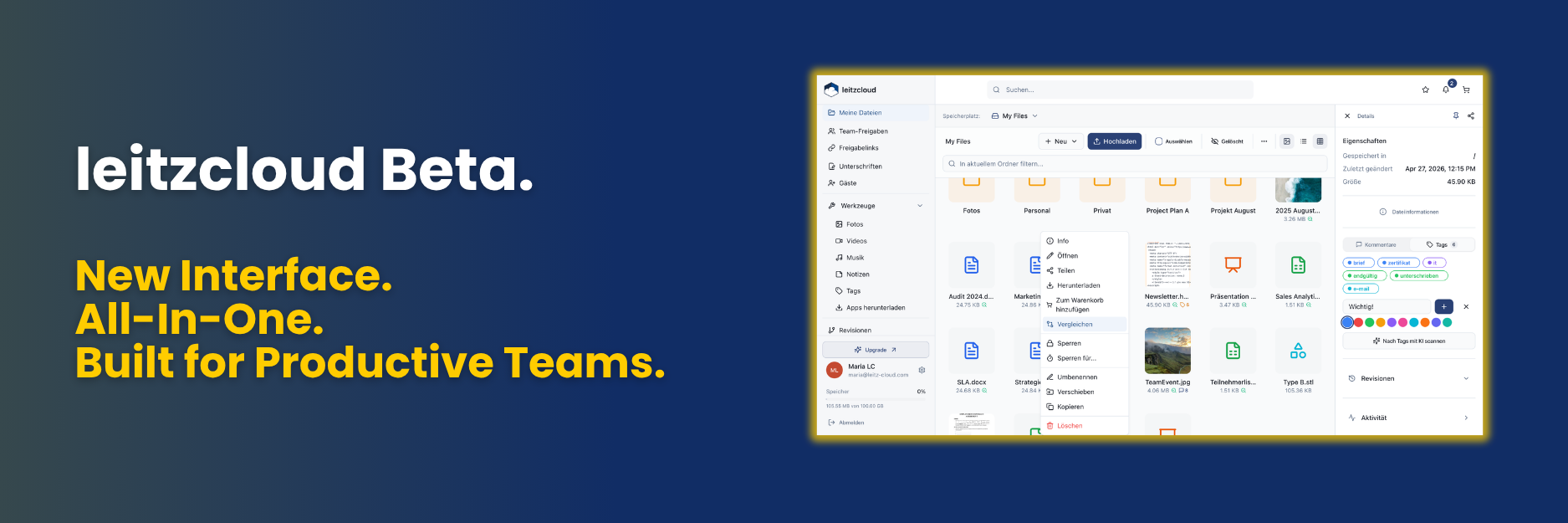
With leitzcloud, you can easily back up your data while protecting your privacy. Thanks to the “zero-knowledge privacy” concept, no one—including the service provider itself—has access to your data. Your information is always stored in encrypted form, ensuring the highest level of security.
We cordially invite you to sign up for a trial account with leitzcloud and manage your data in a secure and protected environment. Your privacy and data security are of the utmost importance, and we are proud to offer you a solution that helps you ensure them. Thank you for your interest and attention as we work together to advance data protection.
Try leitzcloud now.
See for yourself!
It’s easy to create a trial account.
No payment information required.